
Top Pre-Engineered Building Solutions in Pakistan – Durable & Cost-Effective
Top Pre‑Engineered Building Solutions in Pakistan – Durable & Cost‑Effective
🏗️ Introduction
In Pakistan’s rapidly growing industrial and commercial sector, demand for efficient, durable, and cost‑effective construction solutions is rising. Traditional concrete and brick‑and‑mortar construction methods — while reliable — often come with long timelines, high labor and material costs, and limited flexibility. As businesses and investors seek faster turnarounds and scalable infrastructure, Pre‑Engineered Buildings (PEBs) are becoming the preferred solution.
Pre‑Engineered Buildings are factory‑fabricated steel structures, whose components (frames, panels, purlins, etc.) are manufactured off‑site, delivered to the project location, and assembled there. Compared with conventional construction, PEBs offer significant advantages in speed, cost, flexibility, and long‑term sustainability.
In this article, we explore: what PEBs are; their advantages and drawbacks; the state of PEB solutions in Pakistan; leading PEB providers; cost & specification benchmarks; applications; and guidance for clients and developers when opting for PEB.
We also provide tables and comparison charts to help you make informed decisions — ideal for proposals, client pitches, or project planning.
📘 What are Pre‑Engineered Buildings (PEBs)? — Definition & Components
Definition
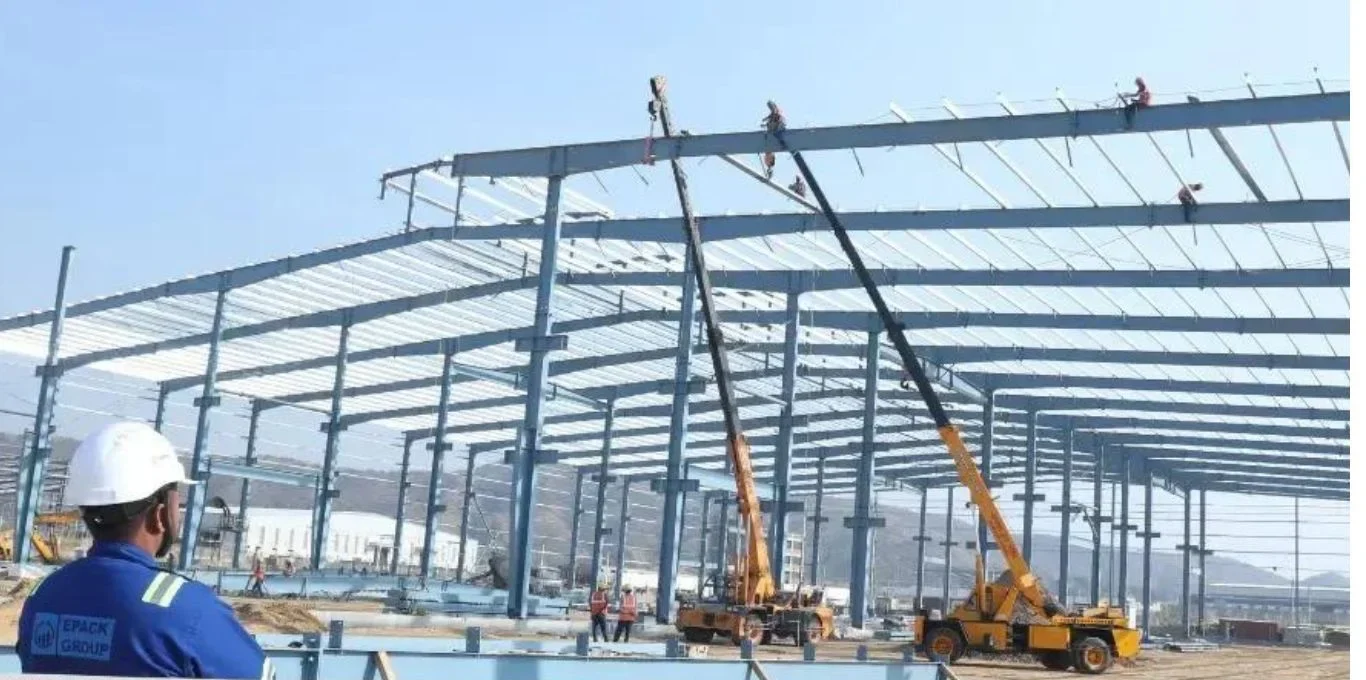
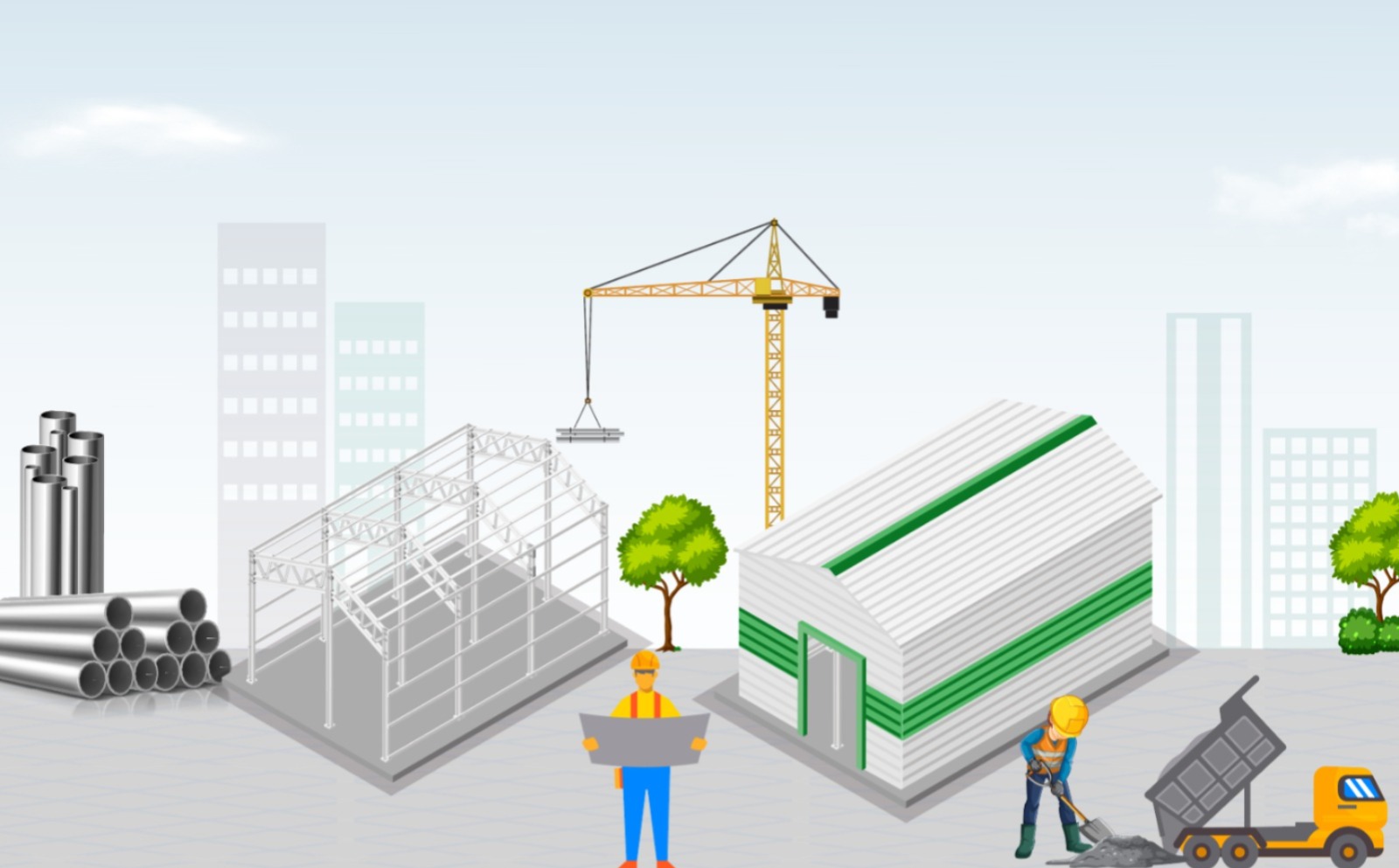
A Pre‑Engineered Building (PEB) is a steel building system in which structural components — primary frames, secondary members (purlins & girts), roofing & wall panels, bracings, and accessories — are pre‑designed, prefabricated in factory conditions, and shipped to the construction site for assembly. epack.com.pk+2Acco+2
Instead of building from scratch on‑site (as with RCC / brick masonry), PEBs rely on modular, pre‑engineered parts — making construction much faster, more predictable, and efficient.
Core Components of a PEB Structure
| Component Type | Typical Materials / Specifications | Function / Role |
|---|---|---|
| Primary Steel Frames | High‑tensile steel (usually welded rigid frames) | Provide main structural support — roof & wall load bearing. epack.com.pk+1 |
| Secondary Members (Purlins & Girts) | Z‑ or C‑sections, cold‑formed steel | Support roof and wall cladding; provide lateral stability. epack.com.pk+1 |
| Roof & Wall Panels | PPGI sheets, or insulated sandwich panels (EPS, PU, PIR, rockwool) | Enclose and insulate building; provide weather resistance and finish. epack.com.pk+1 |
| Bracing & Accessories | Steel bracing, anchor bolts, ventilation systems, skylights, gutters, etc. | Ensure seismic / wind load resistance, drainage, ventilation, finishing touches. epack.com.pk+1 |
Because of the factory-controlled fabrication, every component is manufactured with precision, quality control, and consistent standards — which reduces wastage, improves safety, and ensures structural integrity. Acco+2Steel Build Infra+2
✅ Why PEBs are Gaining Popularity in Pakistan — Major Advantages
1. Speed of Construction & Early Occupancy
Because components are pre-fabricated off-site, PEB buildings are erected far faster than traditional methods. epack.com.pk+2Acco+2
According to industry data, PEB construction in Pakistan can be 40–60% faster than RCC — enabling facilities to become operational months ahead of schedule. epack.com.pk+2Acco+2
For industries, storage facilities, commercial buildings, or any business infrastructure where time is money — this speed offers a significant advantage. mecengineers.pk+2accoengineering.com+2
2. Cost‑Effectiveness & Lower Overall Expenses
PEBs typically result in lower total cost compared to conventional buildings. Key factors include: reduced on‑site labor, minimal material wastage, efficient use of steel, and faster completion reducing overhead costs. Acco+2ittefaqgroup.pk+2
Some sources indicate that PEB projects can be 25–35% cheaper than RCC/brick‑mortar construction. epack.com.pk+1
Moreover, long-term maintenance costs are generally lower — corrosion‑resistant steel and high-quality finishes ensure durability with minimal upkeep. Acco+2Acco+2
3. Structural Strength, Durability & Weather / Seismic Resistance
Steel PEB structures provide superior strength-to-weight ratio compared to conventional masonry. This makes them suitable for large spans, heavy loads, and industrial operations. Steel Build Infra+2Acco+2
In Pakistan — where climate conditions vary significantly across regions, and some areas face seismic risks — PEBs offer resilience against heavy rains, strong winds, and potential earthquakes. Acco+2SA Engineering Pakistan+2
Also, steel is not prone to termite or rot issues — a noticeable advantage over wood or poorly maintained masonry in humid/wet regions. SA Engineering Pakistan+1
4. Design Flexibility, Clear‑Span Interiors & Expandability
PEB systems allow wide, column-free interiors, making them ideal for warehouses, factories, storage units, showrooms, cold-storage, etc. Acco+2pakistansteelmills.com+2
Designs can be customized: from simple sheds and warehouses to commercial buildings, multi-level structures, insulated cold storages, and more. Acco+2technostar.com.pk+2
Moreover, future expansion is often easier: additional spans or modules can be added without major structural disruption. Acco+2accoengineering.com+2
5. Eco‑Friendly & Sustainable Construction
Steel used in PEBs is often 100% recyclable. The controlled fabrication process reduces waste significantly compared to on‑site masonry construction. epack.com.pk+2Acco+2
When including insulated panels, energy efficiency is improved, reducing heating/cooling loads in buildings — an important advantage in Pakistan’s diverse climate zones. epack.com.pk+2silversteelmills.com+2
This makes PEBs a favorable option for businesses and developers aiming for sustainable, long-term construction solutions. Acco+2epack.com.pk+2
📉 Challenges & Limitations of PEBs — What to Watch Out For
While PEBs offer many advantages, there are some limitations and considerations one must bear in mind.
| Challenge / Limitation | Explanation / Impact |
|---|---|
| Limited Architectural Customization (compared to RCC / masonry) | Because PEB structures rely on standardized steel frames and panel systems, achieving complex architectural styles or highly customized façade treatments can be more challenging. accoengineering.com+1 |
| Dependence on Steel Prices / Material Costs | Fluctuations in steel market can significantly affect total project cost — especially in projects spanning large areas. accoengineering.com+1 |
| Skilled Erection & Installation Required | PEB assembly must be done by teams familiar with steel structures; misuse or poor installation can harm structural integrity or lead to leaks, misalignment, or subpar finishes. accoengineering.com+1 |
| Transport & Logistics for Large Components | Transporting large steel frames or panels to remote areas may increase cost and complexity — especially for big-span buildings requiring big components. |
| Post-Fabrication Design Changes Are Difficult | Once components are cut/fabricated, major design changes (e.g. altering span or layout) are hard to implement — so final design must be locked before fabrication. Acco+1 |
🏢 Main Applications of PEBs in Pakistan — Where They Fit Best
PEBs are versatile and can be used across a wide variety of sectors and building types. Some of the common applications in Pakistan include:
Industrial warehouses and storage facilities — For manufacturing units, logistic centers, textile mills, packaging, cold storage, etc. Acco+2pakistansteelmills.com+2
Factories & Manufacturing Plants — PEBs provide large open floor spaces, high loads bearing capacity, and ease of expansions for heavy machinery operation. mecengineers.pk+2Acco+2
Commercial Buildings & Showrooms — Retail outlets, showrooms, offices, multi‑use commercial spaces — with modern facades and flexible interiors. Acco+2technostar.com.pk+2
Cold Storage & Food‑Processing Facilities — With insulated panels and controlled environments, PEBs work well for cold storage warehouses, food & pharma industry storage. silversteelmills.com+2epack.com.pk+2
Agricultural Sheds & Dairy / Poultry Farms — Light gauge steel and ventilated designs suit stables, barns, animal sheds, thereby offering durable, hygienic and easily maintainable structures. silversteelmills.com+2silversteelmills.com+2
Cold Storage, Logistic Hubs, Distribution Centers — Ideal for storage of goods, logistics operations, warehousing, with benefits of speed, space optimization, and energy efficiency. epack.com.pk+2pakistansteelmills.com+2
Recreational & Public Use Facilities — Community halls, sports centers, temporary shelters, event halls — wherever large open spans and fast construction is needed. Acco+2Steel Build Infra+2
Because of the versatility, PEBs are increasingly being adopted across diverse sectors in Pakistan — offering flexibility as business needs evolve. Acco+2SA Engineering Pakistan+2
🏢 Leading PEB Solution Providers in Pakistan — Companies & Their Strengths
Here are some of the well‑known PEB manufacturers / contractors operating in Pakistan, along with their key offerings and strengths:
| Company / Brand | Core Services / Strengths |
|---|---|
| Silver Steel Mills | Industrial steel sheds, warehouses, cold storage, prefab buildings, dairy & agricultural sheds; uses automated CNC fabrication, offers insulated panel buildings, scalable & economical contracts. silversteelmills.com+2silversteelmills.com+2 |
| MEC Engineers | Custom PEB solutions for warehouses, factories, showrooms, sheds, industrial units; emphasizes cost-effective, sustainable and fast-delivery structures. mecengineers.pk |
| TechnoStar Enterprises | Offers design, fabrication and erection of PEB structures for industrial, commercial, and multi‑storey needs; focuses on modern, efficient, and flexible design execution. technostar.com.pk |
| ACCO Engineering / ACCO Construction (your brand) | Provides turnkey PEB solutions — from structural design, fabrication to on‑site assembly; offers lightweight, expandable, and sustainable steel buildings with insulation, finishing, and after‑sale support. accoengineering.com+2Acco+2 |
| SA Engineering (SA Engineering Pakistan) | Promotes PEB as future of construction — emphasizes cost savings, durability, weather & seismic resistance, energy efficiency, and suitability for diverse climates across Pakistan. SA Engineering Pakistan+1 |
These firms represent a cross‑section of PEB providers — from heavy industrial sheds to commercial buildings and prefab solutions — giving clients a range of options based on their project type, budget, and timeline.
💲 PEB Construction Cost & Market Rates — Benchmarks (Pakistan 2025)
Cost for PEB projects depends strongly on size, design complexity, steel rates, panel selection (e.g., insulated vs. plain), location (transport logistics), and finishing requirements. Below is a rough benchmark table reflecting 2025 market insights. epack.com.pk+2epack.com.pk+2
| PEB Type / Use Case | Approx. Cost per sq. ft (PKR) |
|---|---|
| Basic Industrial Shed / Simple Warehouse | PKR 350 – 550 epack.com.pk |
| Warehouse / Logistic Building (medium spec) | PKR 450 – 650 epack.com.pk+1 |
| Commercial / Retail / Office Steel Structure | PKR 750 – 1,500 (depending on finishing, façade, windows, insulation, etc.) epack.com.pk+2epack.com.pk+2 |
| Cold Storage / Insulated Building (PUF / PIR insulated panels) | PKR 900 – 1,800 (varies with insulation thickness, HVAC, flooring, etc.) epack.com.pk+2silversteelmills.com+2 |
⚠️ Note: These are approximate — actual costs may vary due to fluctuating steel prices, transport costs (especially for remote areas), design complexity (height, clear span, load requirements), and finishing standards (insulation, cladding, HVAC, internal partitions).
Also, the relative savings compared to conventional RCC/brick‑masonry buildings are typically 25–35% overall (materials, labor, time) when properly optimized. Acco+2SA Engineering Pakistan+2
✅ Why PEB Makes Sense for Pakistan — Contextual Strengths
Given Pakistan’s economic, industrial, and climatic conditions, PEB solutions are especially well-suited. Here’s why:
Rapid industrial growth & demand for warehouses / factories: With rising manufacturing (textiles, FMCG, cold chain, logistics), there is demand for buildings that can be erected quickly without long delays. PEBs meet this requirement.
Budget constraints & need for cost‑effective solutions: Many businesses and investors operate under tight budgets — PEB’s lower overall cost makes projects feasible where RCC might be economically unviable.
Diverse climate zones & environmental conditions: From humid coastal areas to hot plains to seismic zones, PEB’s steel strength, corrosion resistance, insulated options, and adaptability make it a resilient solution.
Need for flexible, expandable infrastructure: As businesses grow, they may need to expand warehouses, add storage, or modify layouts; PEB allows easier addition or modification compared to rigid RCC structures.
Sustainability and efficient resource use: With growing awareness of environmental impact, PEB’s recyclable steel, minimal waste construction, and potential for energy-efficient insulation make it a green alternative.
For Pakistan’s developers, industrialists, and commercial investors — PEB offers a balanced path between performance, cost, speed, and flexibility.
🏢 PEB Projects — Typical Scope & Specification Checklist for Pakistan (As Template)
If you are preparing project proposals or quotations (particularly under your own brand, ACCO), the following spec‑checklist template can help standardize PEB projects and ensure clarity with clients.
✅ Pre‑Construction / Design Phase
Finalize building use case (warehouse / factory / cold storage / showroom / etc.)
Determine required clear‑span width, bay spacing, roof slope, eave height, crane loads (if any), floor load, and live / dead loads.
Select frame type: rigid steel frames (for open spans) or modular frames (for expandable units).
Choose wall/roof panel type: PPGI sheets for simple sheds, or insulated sandwich panels (EPS, PU, PIR, rockwool) if thermal control needed.
Decide on additional features: ventilation (turbo fans, louvers), skylights, gutters, insulation, ventilation, signage, mezzanine, internal partitions.
Prepare structural drawings, load calculations, foundation design (foundation type depends on soil, loads, seismic zone).
🔨 Fabrication & Material Specifications
Use high‑strength, hot-dip galvanised / anti-corrosive steel for main frames & secondary members.
Use CNC-fabricated frames for precision, reduce wastage, ensure quality.
For walls and roofs — select gauge (e.g. 24–26 gauge for PPGI), or spec sandwich panels with thickness, insulation type. epack.com.pk+1
Use proper bracing, anchor bolts, wind‑load / seismic‑load design per local building codes.
If building will store temperature-sensitive goods (cold storage, food, pharma) — include insulation, vapor barriers, HVAC provision, drainage.
🏗️ Erection / On-Site Assembly
Site preparation: level ground, foundation casting, anchor bolts alignment.
Use skilled erection team — ensure bolts are tightened, frames correctly plumbed, bracing properly installed; follow safety & QA procedures.
Install purlins, girts; then install roof & wall cladding, insulation, windows/doors, ventilation, finishing.
Perform final inspection — check structural alignment, leak test (if insulated), quality of finishes, wind load resistance, foundation stability.
Handover & after-sale support — provide maintenance schedule, inspections, structural assessment periodically (recommended for 25‑year structural guarantee or similar warranty).
📄 Sample Specification Table (For Client Proposal)
| Specification Item | Details / Value / Options |
|---|---|
| Frame Material | Hot-dip galvanised high‑tensile steel, welded rigid frames |
| Roof Panels | PPGI sheets OR insulated sandwich panels (specify type: EPS/PU/PIR) |
| Wall Panels | PPGI or insulated sandwich panels |
| Clear Span | e.g. 12 m / 18 m / 24 m (custom) |
| Eave Height | e.g. 6 m / 8 m / custom |
| Roof Slope | e.g. 1 in 10 or per design |
| Snow / Wind / Seismic Load Design | As per local codes (specify load values) |
| Foundation Type | Isolated pad / Strip / Raft — per soil & load |
| Door / Window Type | Rolling shutter / Personnel door / Skylights / Vent louvers |
| Insulation & Ventilation | Rockwool / PU / PIR; turbo fans / ridge vents / skylight / HVAC prep |
| Internal Layout | Warehouse bays, office mezzanine, storage racks, partitions (if any) |
| Estimated Cost / sq.ft (basic) | PKR 350 – 650 (depending on specification) |
| Estimated Cost / sq.ft (insulated / commercial) | PKR 750 – 1,800 (depending on finish) |
This specification template can be customized per project — for warehouses, cold storages, factories, commercial buildings, etc.
📦 PEB vs Conventional RCC / Brick‑Masonry: A Direct Comparison
Here is a comparative overview highlighting why many developers and businesses in Pakistan are shifting towards PEBs.
| Feature / Parameter | PEB Steel Building | Conventional RCC / Brick‑Masonry Building |
|---|---|---|
| Construction Time | ~40–60% faster — many projects complete in weeks to a few months. epack.com.pk+2Acco+2 | Typically takes significantly longer — months to years depending on scale, delays, finishing. |
| Cost per sq.ft (Base / Simple Structure) | Lower — due to reduced labor, minimal waste, optimized steel usage. epack.com.pk+2Acco+2 | Higher — due to labor intensive processes, material wastage, longer timelines. |
| Material Waste | Minimal (factory-cut precision reduces off‑cuts). Steel Build Infra+1 | Often high — on‑site cutting, masonry wastage, slab over‑ordering, etc. |
| Flexibility & Expandability | High — modules can be added, modified; clear-span interiors; easy reconfiguration. Acco+2epack.com.pk+2 | Low — structural changes often require major demolition or reinforcement. |
| Maintenance & Durability | High — corrosion‑resistant steel, minimal maintenance, long lifespan (30–50+ years) accoengineering.com+2Acco+2 | Moderate — susceptible to dampness, termite (if wood used), wear and tear; requires ongoing maintenance. |
| Structural Strength & Seismic / Weather Resistance | Strong — designed for wind, seismic loads; steel tolerates heavy loads and environmental stress. Acco+2SA Engineering Pakistan+2 | Reliable — but structural strength depends heavily on workmanship, materials quality; exposed to cracking, dampness, moisture, etc. |
| Suitability for Large Spans / Industrial Use | Excellent — clear-span large warehouses, factories, sheds, hangars. Acco+2silversteelmills.com+2 | Limited — large spans require heavy RCC beams/columns; less cost-effective. |
| Environmental / Sustainability | Good — steel is recyclable; minimal waste, can include insulation for energy savings. epack.com.pk+2Steel Build Infra+2 | Poorer — high material consumption, waste, energy inefficiency unless special measures taken. |
From the comparison, it’s clear that for many industrial, commercial, and large‑span projects — PEBs present a more efficient, cost-effective and sustainable option compared to conventional construction.
🏭 Real‑World Use Cases & Success Stories in Pakistan
Though detailed public project-by-project case studies are limited (due to clients’ confidentiality), PEB adoption in Pakistan has grown significantly across multiple sectors. Leading manufacturers and contractors report widespread acceptance for:
Warehouses & logistic centers — benefiting from large clear-span storage, insulation, ease of assembly. Acco+2silversteelmills.com+2
Factories — especially light-to-medium manufacturing, textile mills, packaging, cold storage, food processing plants — where PEB’s load capacity and insulated panels are valuable. mecengineers.pk+2epack.com.pk+2
Commercial units, showrooms, retail outlets — modern facades, quick completion, flexible layout attractive for retail developers. technostar.com.pk+2Acco+2
Agricultural sheds, dairy & poultry farms — where cost, ventilation, hygiene, and durability are key — PEB sheds offer practical advantages. silversteelmills.com+1
Cold storage & temperature-controlled warehouses — because of insulated panels and controlled environment possibilities, suitable for food, pharma, grocery storage. silversteelmills.com+2epack.com.pk+2
For investors and businesses — this means PEBs are not just theoretical advantages, but tangible, implemented solutions across Pakistan’s economy.
🏢 Why Your Company (ACCO) Should Embrace PEB as Core Offering — Strategic Fit
Given your background (ACCO Construction / ACCO Engineering), existing interest in civil works, and ability to provide turnkey solutions, integrating PEB offerings into your portfolio makes strategic sense. Here’s why:
Turnkey & Integrated Solutions: With your engineering and construction knowledge, offering design-to-finish PEB solutions caters to clients who want “ready-to-use” infrastructure without managing multiple vendors.
Cost & Time Advantage — Competitive Edge: You can attract clients looking for fast delivery and lower cost compared to RCC — especially warehouses, factories, logistic hubs, etc.
Market Demand for Industrial & Commercial Spaces: As Pakistan’s industrial and commercial activity grows, demand for warehouses, factories, cold storages, and commercial sheds will continue rising. PEB meets those demands well.
Flexibility & Customization: Clients often need layout flexibility, expansion options, insulation (for cold storage), or future modifications — PEB allows you to offer that.
Sustainability & Environmental Appeal: Using recyclable steel, and offering insulation / energy‑efficient designs, you can position ACCO as a modern, eco‑conscious construction brand.
Differentiation from Traditional Builders: Many construction firms still rely solely on RCC/brick masonry methods. PEB offering sets you apart, gives a niche, and helps attract different project types (industrial, warehouses, sheds) that traditional builders may avoid.
Given these advantages, PEB can become a core service line under ACCO — complementing your civil works, renovation, residential construction, and design‑build services.
📋 Recommended Specification & Quality Checklist for PEB Projects (Your Standard)
To ensure consistent quality and client satisfaction, it’s helpful to use a standardized checklist whenever you propose or execute a PEB project. Below is a recommended specification & quality control checklist tailored for Pakistan (suitable for ACCO’s use).
Pre‑Design: Requirements & Data Collection
Purpose of the building (warehouse / factory / cold storage / showroom / shed)
Required clear‑span width / bay size / number of bays
Eave height, roof height, roof slope
Load requirements: live load, floor load, roofing load, wind load, seismic load if applicable
Foundation soil data: soil type, bearing capacity — to design foundation type properly
Environmental conditions: region climate, rainfall, temperature variations, humidity, exposure to salt / coastal / industrial pollution (for corrosion)
Expansion / future modification plans
Design Phase
Structural drawings including all frames, purlins, bracings, anchor bolts, foundations
Load calculations (dead loads, live loads, wind, seismic) per local building codes / best practices
Selection of steel grade (high-tensile, anti-corrosion, galvanised)
Selection of wall/roof panels (simple PPGI sheets or insulated sandwich panels, with thermal insulation if needed)
Provision for ventilation, insulation, windows/doors, loading/unloading (for warehouses), internal layout (mezzanine, partitions), drainage, guttering, rainwater harvesting if needed
Fabrication & Material Quality Control
Use of CNC/automated fabrication for precision and consistency (reducing waste) silversteelmills.com+1
Steel quality testing — tensile strength, galvanization, anti-corrosion coating, welding quality
Pre-fabrication of frames with pre-drilled bolt holes to ensure exact alignment on site
Procurement of quality roof/wall panels (PPGI or sandwich panels), insulation materials, guttering, fastening systems
Site Preparation & Installation
Ground leveling, foundation casting (strips / pads / raft as per design)
Anchor bolt installation & alignment verification
Erection of primary frames in correct sequence — ensure plumb, alignment, bracing
Installation of purlins, girts, roof and wall panels — ensure sealing, insulation, water/drainage mitigation
Installation of ventilation systems, skylights, doors/windows, internal partitions or mezzanine if applicable
Final quality inspection: structural alignment, leak check (for insulated/cold storage), finish quality, load test if needed
Post-Handover Support & Maintenance
Provide a maintenance schedule — periodic inspections (foundation, frames, bolts, insulation, cladding)
Provide warranty (structural, workmanship) — e.g., 20–25 years for structural steel, 5 years for finishing (typical)
Offer retrofit or expansion services (if client wants to expand in future)
Having this standardized checklist helps you present professional, transparent proposals — useful especially when dealing with clients unfamiliar with PEB systems.
📌 Strategic Recommendations & Best Practices for Clients in Pakistan
If you are advising clients (industrialists, warehouse owners, retail developers, cold‑storage investors) or planning projects yourself — here are recommended practices and strategic advice when choosing PEB:
Define clear project requirements upfront — load specifications, height, expansion plans, insulation needs, environmental conditions. Early clarity avoids costly redesigns.
Use high‑grade steel and proper galvanization / corrosion protection — given Pakistan’s varied climate (humidity, coastal salt, heavy rains), corrosion resistance ensures longevity.
Plan for insulation / ventilation if needed — especially for cold storage, food warehouses, or climate‑sensitive goods. Sandwich panels + appropriate ventilation / HVAC improves usability and energy efficiency.
Choose reliable, experienced contractors with full turnkey capability — to avoid issues in fabrication, transportation, and on-site assembly.
Consider transport & logistics costs for remote sites — large steel frames/panels may cost more to transport; factor that into the overall project budget.
Include maintenance and after‑sale support in contract — ensure periodic inspections, tightening bolts, checking cladding, repainting/coating as necessary.
Keep future expansion in mind — design frames and foundations to allow for future additions or modifications; PEB’s modular nature can be advantageous.
Adopt sustainable and energy‑efficient design choices — insulated panels, ventilation, possibly solar-ready roofs — to enhance long-term value and reduce operational costs.
By following these best practices, clients and developers can maximize the benefits of PEB while minimizing risks.
🔎 Why PEB Is a Smart Option for Pakistan — Economic and Industrial Context
Pakistan is undergoing industrial transformation, with growing demand in sectors such as logistics, warehousing, manufacturing, cold chain for food and pharmaceuticals, retail expansion, and even agriculture & dairy farming. In such a dynamic environment:
Speed matters — businesses want to operationalize warehouses, factories, or storage units quickly.
Cost sensitivity — especially for small to medium investors or startups — needs affordable but durable infrastructure.
Flexibility — as businesses grow or change direction (e.g., expand storage, add cold storage, reconfigure layout).
Environmental and sustainability concerns — rising energy costs, need for efficient construction and operations.
PEB meets all these demands: fast, cost‑effective, durable, flexible, and potentially green.
For a construction & engineering company like ACCO, embracing PEB solutions places you at the forefront of modern, demand‑driven infrastructure development in Pakistan — giving you a competitive edge over traditional builders.
📈 The Future of PEB in Pakistan — Trends & Opportunities
Based on industry reports and current market behavior, here are some trends and opportunities likely to shape the future of PEB in Pakistan:
Rise of turnkey PEB contractors — companies offering end‑to‑end services (design → fabrication → erection → finishing → maintenance), giving convenience to clients and ensuring quality. (Your ACCO brand fits here well.) accoengineering.com+2epack.com.pk+2
Hybrid structures: RCC foundations + steel superstructures — combining traditional foundation strength with flexible, lightweight steel frames for better performance and cost‑saving. accoengineering.com+1
Insulated & climate-controlled PEB buildings — for cold storage, food, pharma, climate-controlled warehouses, data centers. As demand for cold-chain logistics rises, insulated PEBs will see greater adoption. epack.com.pk+2silversteelmills.com+2
Prefabricated residential or mixed-use buildings — with steel frames and modular panels, faster housing solutions, especially for remote areas, temporary housing, or low-cost accommodation. Some PEB providers already offer prefab houses. silversteelmills.com+2silversteelmills.com+2
Integration with sustainable/green building features — solar-ready roofs, energy-efficient insulation, recyclable materials — responding to global and domestic environmental concerns. accoengineering.com+2Steel Build Infra+2
Expansion to tier‑2 / tier‑3 cities & rural areas — because PEB allows for easier transport, assembly, and lower dependence on skilled masonry labor, making it viable beyond major urban centers.
Overall, as awareness grows and contractors like ACCO scale PEB capabilities, demand for pre‑engineered buildings in Pakistan is likely to accelerate.
📝 Conclusion
Pre‑Engineered Buildings (PEBs) represent a paradigm shift in construction — especially relevant for modern Pakistan, where industrial growth, commercial expansion, budget constraints, and demand for fast, durable infrastructure converge.
With advantages such as faster construction, cost savings, structural strength, design flexibility, low maintenance, and sustainability, PEBs offer a competitive, efficient and future‑ready alternative to conventional RCC/brick‑masonry buildings.
For developers, investors, industrialists, and construction companies alike — PEBs make sense. For your brand, ACCO Engineering / ACCO Construction, integrating PEB solutions into your service portfolio would align well with your ongoing projects (civil works, turnkey sheds, commercial projects, industrial clients), and position you as a forward‑looking, versatile construction firm.
If you like — I can also generate a full ready-to-use brochure-style specification & quotation template for PEB buildings (warehouse / factory / cold storage) — you can plug in your rates, company info and use it immediately for client proposals.
🔖 Tags (for SEO / Article Meta / Internal Use)
Pre-Engineered Buildings, PEB Pakistan, PEB Steel Structures, Pre Engineered Building Cost Pakistan, Pre Engineered Shed, Warehouse Construction Pakistan, Industrial Sheds Pakistan, Turnkey PEB, Steel Warehouses, Prefabricated Steel Building, PEB vs RCC, Cost Effective Construction Pakistan, Durable Steel Buildings, Cold Storage PEB Pakistan, Modular Steel Building, PEB Contractors Pakistan, ACCO Engineering, ACCO Construction
If you like, I can structure this article into two versions:
A web-optimized SEO version (with headings, internal/external link placeholders, icons, shorter paragraphs) — ideal for your ACCO Construction website;
A print-ready brochure / PDF template (with tables, spec sheets) for proposals to clients.
Do you want me to build those now?
Related Posts
Fast, Durable & Cost-Effective PEB Solutions | ACCO Engineering
Reliable Industrial PEB Contractors in Pakistan | ACCO Engineering
Export Industry PEB Structures | ACCO Engineering
Post a Comment cancel reply
You must be logged in to post a comment.